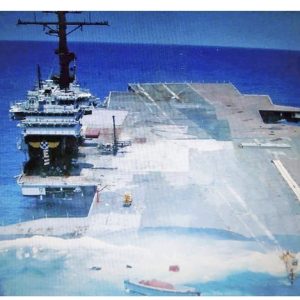
You must be joking?
Some of the container ships and cruise ships have engines ranging from 60000 -100000 hp. That’s a massive engine with a lot of horsepower.
You need a massive engine weighing several hundreds of tonnes to produce that kind of horsepower and a 100000 hp engine is nothing to belittle at.
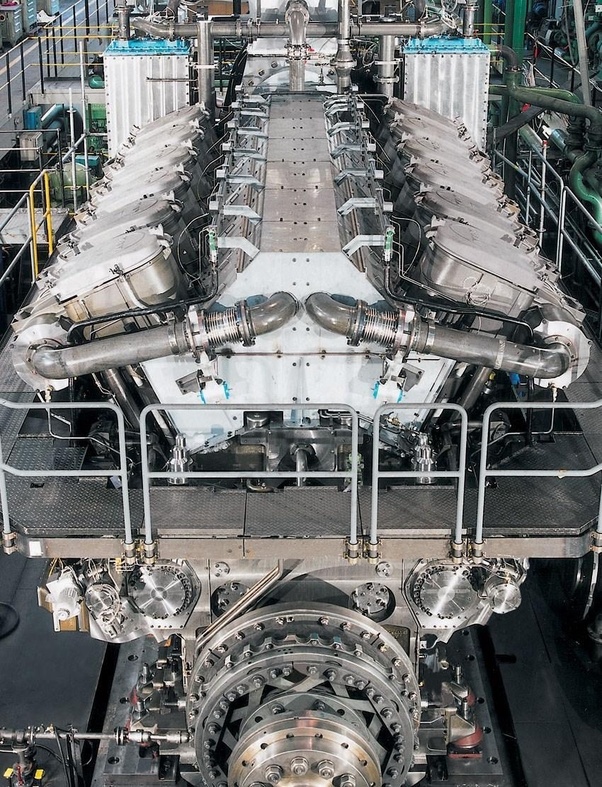
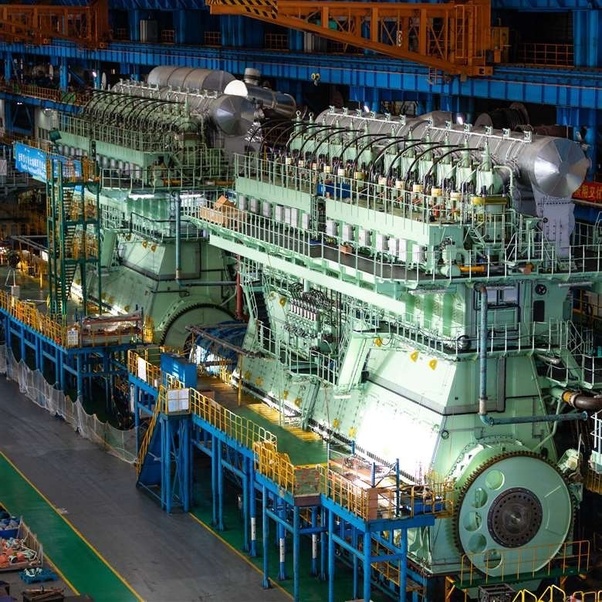
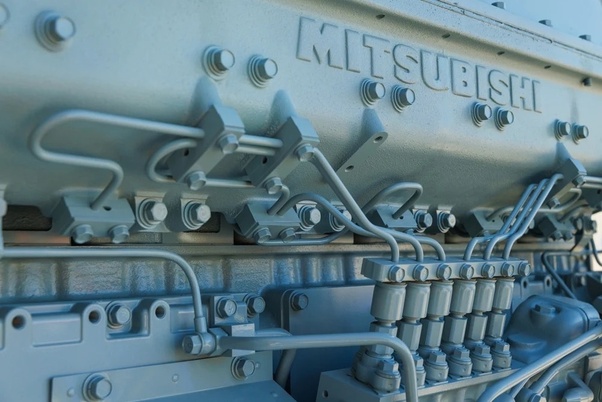
Ship engines produce LOTS of horsepower as in 100,000 Hp
However they are large and heavy for that power output compared to smaller engines
That is because they run for weeks at a time
The weight is much less of a problem with a ship
And for efficiency
Diesel engines work by spraying the diesel into the air – you need to get the molecules of diesel to meet up with their molecules of oxygen
This is done by “swirling” the air – and blasting the fuel in under high pressure
It takes a LOT more energy to “Swirl” the air (a gas) than it does to squirt the fuel
Diesels in vehicles used to use a “pre-chamber” to swirl the air and inject the fuel at about 400 Bar – when they went away from that they had to up the injection pressure past 1000 Bar – but they got close to 20% improvement in fuel efficiency
But even then “Direct Injection” engines swirl the air
That bowl you see makes the air swirl like a smoke ring so that the fuel and air can find each other
Very BIG diesels – like ship engines are “Quiescent” engines – they are designed NOT to swirl the air
The result is that you have to inject the fuel to meet the air – which limits the rpm – so you use low revs
But it makes the engine more efficient – so it burns less fuel
Low revs means you need a bigger engine for the same power
I’m going to emphasise that last point!!
Torque is (very roughly) proportional to size
Power = Torque x Rpm
So if you rev twice as fast you get twice the power from the same size engine
The huge ship engines run a LOT slower – as in about 1/20th the revs
So you need an engine 20 times as large to get the same power
I will add Paul Haas’s very good point – if the engine is close to prop speed then you need less or zero reduction to drive the prop.