Around 50% of the 31 M1 Abrams tanks the U.S. has sent to Ukraine have been either destroyed or damaged beyond repair.
This is indeed a significant number. In comparison, of the more than 300 German Leopard 1 and 2 tanks delivered to Ukraine, “only” 20% have been lost.
There are several reasons why the Abrams have suffered higher losses:
These tanks were originally assigned exclusively to Ukraine’s elite 47th Mechanized Brigade. This is the unit the Armed Forces of Ukraine call upon when they expect particularly tough battles. Naturally, the more a tank is sent into harm’s way, the greater the chances it will be destroyed, damaged, or abandoned.
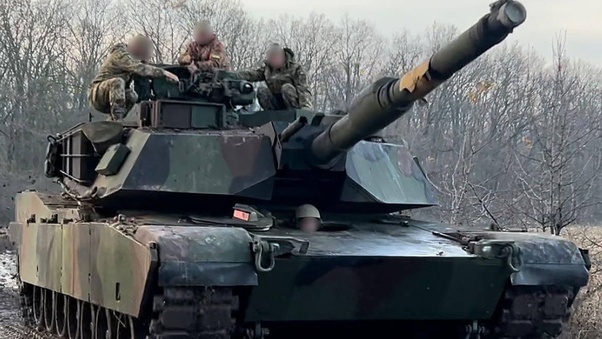
A US-delivered M1 Abrams tank in Ukraine. The picture was taken in March 2024. As one can see, at this time, these tanks were not yet fitted with ERA, anti-drone cages, or jammers. (Picture: Armed Forces of Ukraine).
Another reason for the relatively high number of Abrams losses is that, in the beginning, some crews were not sufficiently trained. In addition, the Abrams were hastily deployed without necessary modifications, such as explosive reactive armor (ERA) and anti-drone cages. This made them easy targets for Russian first-person view (FPV) drones.
These mistakes have now been corrected, and the Ukrainian Abrams have proven to be just as effective as other Western-delivered tanks of the same generation, such as the Leopard 2s and the British Challenger 2s. All of these tanks have outclassed any Russian tanks encountered on the battlefield.
The Ukrainian troops who have the privilege of operating these tanks love them.
Let’s put it this way.
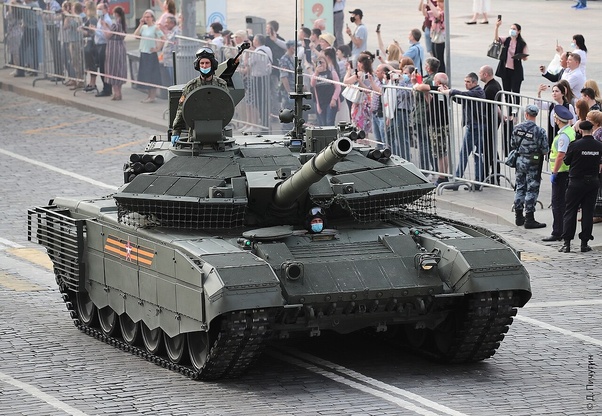
T-90M on a parade
The T-90M is the most modern of Russian tanks, debuting in 2017. It has all the latest features Russian military-industrial can provide, it’s the elite breakthrough vehicle that is surely up to whatever is thrown at it and a terror to behold.
Do you know how many have been lost in Ukraine? 75 documented with images, but possibly more in the “unidentified” department. That’s easily ten for each lost export model Abrams that was modern 20 years ago but was obsolescent when it came to the front line.
That’s about a quarter of all T-90M tanks ever produced by the way.
Other modern Russian tanks don’t fare any better. The T-72B3 obr.2016, the finest and most powerful variant of the T-72, suffered 270 documented losses, the war modification T-72B3 obr.2022 another 35. Add in the other T-90 models and Russia lost hundreds of their most modern tanks in the war easily and over 2000 total. Losses are so bad Russia is now increasingly pushing early model T-54/55s to the front line for the lack of anything better.
Against this debacle you think Abrams losses in single digits are somehow relevant? Of course they’d get destroyed in Ukraine, they’re fighting an advanced enemy that is throwing everything and everyone at them. The fact they suffer losses was entirely expected. The fact they suffer losses in single digits after being in use for months on end means something too, but not something Russia would particularily like.
Firstly, according to the best accounting we have (Oryx) as of the writing of this post (April 1st 2024) only two Ukrainian M1’s have been outright destroyed. Two more have been damaged and abandoned (but may be recovered later)
With that said, when you go to war, you are going to lose equipment.
The M1 Abrams is a very good tank, maybe even the best in the world (depending on who you ask) but no tank is invincible.
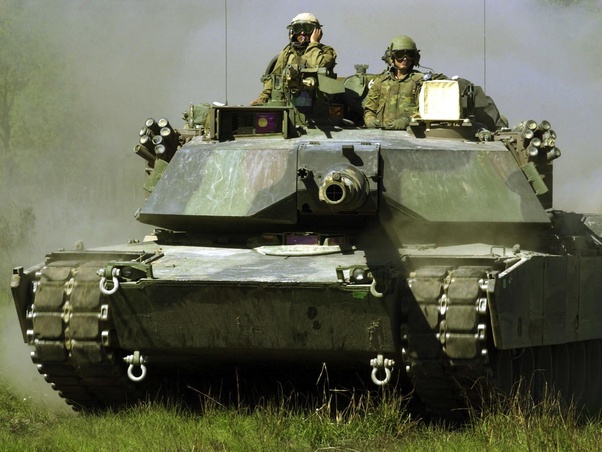
One of the many reasons the M1 does so well when the U.S. deploys it is because it is used in high volume, concentrated maneuver warfare under complete and absolute air supremacy in the sky.
Ukraine has neither air supremacy nor the numbers or tactical situation (currently) in which they can effectively apply maneuver warfare. The M1’s in Ukraine are thus not being used per the doctrine for which they were designed, which is naturally going to mean they are going to be less effective than previous large scale deployments (like say, in Iraq in 2003 or in 1991.)
It is also worth noting that Ukraine – in the name of expediency – received the older M1A1’s and also – due to export restrictions – got export armor which means they are going to be slightly more vulnerable than an export M1A2 which is in turn slightly more vulnerable than the latest variants of the domestic M1A2’s (SEP v3) the U.S. Army uses which have depleted uranium armor.
Ukraine’s fighters are heroes and are doing an admirable job given the circumstances, but their tank operators also have not had the same amount of training and drilling (until every action is in muscle memory) that a professional standing army like the U.S. Army can afford to do, so they are not going to have the same instincts and gut reaction to use the tanks as effectively as they would if they had years of training and regular drills.
Training – normally extremely important – and equipment capability are – however – in this case somewhat minor by comparison. The biggest contribution is – as previously mentioned – fighting per a doctrine they weren’t designed for, without air supremacy, without air support and not used to attack in strong maneuver warfare break-through concentrations.
The war in Ukraine right now is being fought using pre-WWII tactics on both sides, and when you fight that way, you are going to lose tanks and other equipment, no matter how good they are.
It’s not Ukraine’s fault. They simply do not have the resources to fight this conflict the way a combined international NATO force would with air dominance and SEAD missions (to eliminate enemy integrated air defenses) followed by relentlessly pounding enemy positions using high precision air munitions to soften enemy lines, and allow the armored columns to punch through and conduct maneuver warfare under air cover.
Because they cannot do this, they have to use the best tactics they can in their current situation, and that will lead to attrition.
The M1A1 is great. The Abrams, the Leopard 2, the Challenger 2 are all top notch tanks, and if they go head to head in tank on tank warfare with anything Russia has in their inventory today or even before the Ukraine conflict, including the T-90M – short of some sort of spectacular tactical failure, the western tanks would come out on top, but any of these tanks are going to see losses when in combat, especially if used in the way Ukraine is being forced to use them.
The only away to avoid that is to get the Ukrainians more resources so they can fight this war per modern doctrine.
Now lets compare these 2–4 losses with the staggering 2,878 tanks lost by Russia thus far in this conflict.