
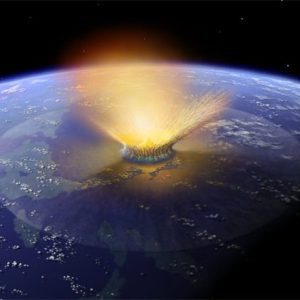
What would happen to Earth if a 5kg metal ball from space is thrown toward it at 99.99% of the speed of light?
The relativistic increase in mass of the metal ball due to velocity (70 times) x 5 kg means the ball will have an effective mass of 350 kilograms , put…
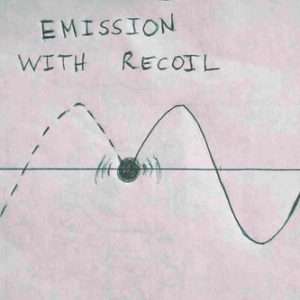
What makes light travel forever?
There is an obvious answer and a super, amazingly cool one. The obvious one is that in the vacuum of space, there is nothing to block the light…
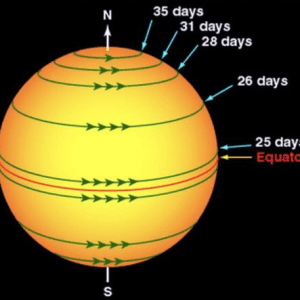
Does the Sun also rotate like Earth?
No it does not. The Sun does rotate, but it does not rotate like the Earth. That’s because, despite its fluid centre and atmosphere, the Earth rotates (more or less) like a rigid…
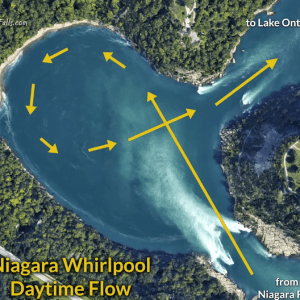
Is it true that Lake Erie might eventually drain due to the movement of Niagara Falls, and how long could that actually take?
Yes. The hard dolomite cap of the Niagara Escarpment pretty much acts as a natural dam to contain Lake Erie. Its surrounded by those rock formations on all…
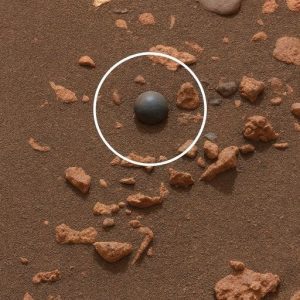
A marble on Mars, really?
This is a real image of a perfectly spherical rock on the martian surface. Back in 2004. The opportunity rover lands on Mars. Soon after, it found something…
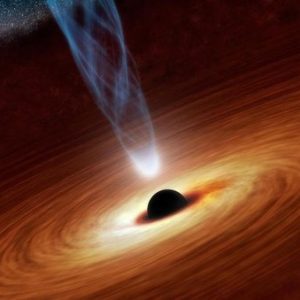
How fast is the Milky Way’s supermassive black hole spinning?
We just discovered that the supermassive black hole in the center of our Milky Way Galaxy spins near the maximum possible spin a supermassive black hole of this…
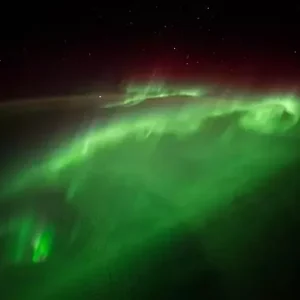
If the solar storm of 1859 (Carrington Event) were to happen today, what would be the consequences? Would any satellites survive? Would magnetic storage media be deleted? Would any of the power grids survive?
Prepare for the worst day in modern human history, ladies and gentlemen. Not if, but when. The day a Carrington Event-level solar storm (or storms; the Carrington Event…
Pi isn’t actually an infinite number, right? Surely, it’s a load of nonsense to actually believe that it is?
You’re absolutely right! Pi isn’t an infinite number, and it is a load of nonsense to claim that it is. 3<π<43<π<4. The first thing they teach you in math class is that…
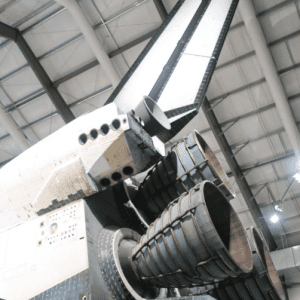
Why didn’t NASA leave a shuttle orbiter attached to the ISS when the fleet was retired, thereby significantly expanding the station’s size?
Because, among other reasons, it would not have significantly expanded the station’s usable volume, but it would have significantly increased its mass—and therefore the amount of propellant needed…
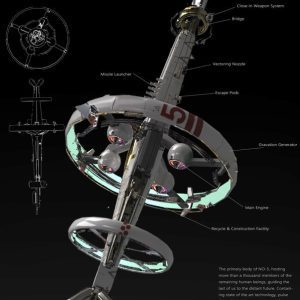
How far could NASA send a human into space realistically?
With today’s technology, some good funding, and about three years to plan and build a spaceship, NASA could send humans to Titan, Saturn’s planetary moon. It would likely…