Not that long ago (15 – 20 years) the US dispatched the 6th fleet to the Mediterranean with the instructions to shadow the Admiral Kuznetsov. That was not so the US could keep track of it, believe me, its not hard to figure out where that mazut burning, smoke belching monstrosity is. But, rather, they were there because the US was afraid the Admiral Kuznetsov would sink and the US was prepared to perform a rescue mission for the crew.
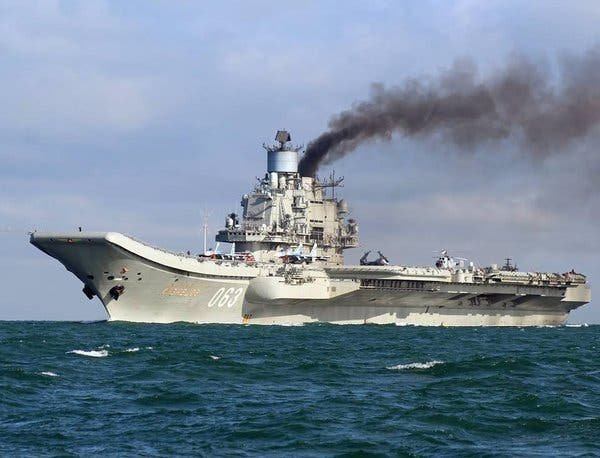
The Admiral Kuznetsov carries ”realistically” about 30 low performance aircraft, if they push it they might have as many as 50 aircraft, about half being helicopters. The Admiral Kuznetsov has no launch capabilities, it uses a “ski jump” bow to help aircraft to be able to fly, these aircraft can not carry full weapon or fuel loads, makes them too heavy to take off.
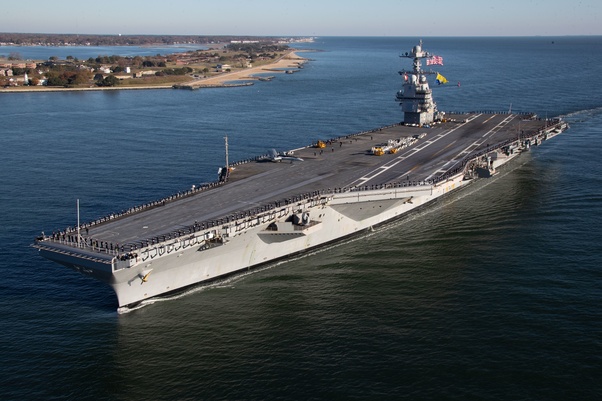
A Nimitz or Ford class are at a minimum 6 knots faster, the normal complement of aircraft is 65–70 aircraft, thats fixed wing, high performance, the best aircraft the US has. and if they really push it the can operate over 90 aircraft. The US uses catapults (Nimitz has steam powered, Ford has electromagnetic) to ensure the aircraft reach flying speed, even with full fuel and weapon loads, and even extra fuel in the form of drop tank. Currently the US is operating 10 Nimitz and 1 Ford class and have 2 Fords under construction.
I think the only fear the US has of the Admiral Kuznetsov is the environmental damage it does wherever it goes.
Here’s a little personal story. My experience with the Russian Navy.
I had an extremely rare experience when I was in the Navy. Back in 2008ish I was stationed on the USS Frank Cable- a submarine tender. At that time a nice little peace keeping exercise we did with Russia was to join them for a bit of a commemoration ceremony with the Russian Navy to commemorate the bravery of some lost Soviet submariners.
We steamed alongside a handful of Russian ships. One of which we spent a little bit of time around was the pride of the Pacific fleet- the RFS Varyag! It was quite impressive seeing it sailing about, and the Russian formations looked rather intimidating. During the 8 day exercise with the Varyag and its accompaniment- the Varyag flamed out 3 times.
3 times in six days- the pride and joy of the Russian Pacific fleet. The ship that is best maintained and crewed with the best sailors… let out a gigantic billow of black smoke (larger than usual) and fell dead in water. No power. No maneuvering. Nothing. Each time it took a couple hours for them to get the boilers lit again and get cruising.
When all was said and done- we proceeded to Vladivostok for a port visit. This is an even so exceedingly rare for US Navy ships to do. I have never heard of another case of this happening to any crew since the 40s at least. We got to go on liberty in our dress white uniforms from a Russian military ports- on Russian land- with Russian locals.
I had ample time to hang out with Russian civilians as well as Russian sailors- both conscripted and officers. Most of our conversations with the sailors left them looking rather… depressed. They described their daily experiences, mostly consisting of cleaning and little else. Literally on hands and knees with rags and buckets with soapy water cleaning decks- even underway. It was starkly contrasted to our daily routine.
You see- in the US Navy we are almost always training underway. Quite literally there is always some form of training exercise on the ship underway. Even our non-combat ship- multiple times a week we had live fire exercises where we shot targets and practiced weapons. Flooding and fire simulations almost daily. UNREP or flight ops exercises 3–5 times a week. Ship boarding exercises. Emergency comms exercises. Man overboard trainings. Emergency maneuvers. Abandon ship.
The level of experience of the average 1 year seaman in the USN far exceeds the experience of most 4+ year sailors in the Russian Navy. Our ships systems are constantly used. We aren’t perfect- but our skills don’t get rusty, and while our ships WILL get some rust- functionality of all our core systems are pretty much guaranteed when we need it.
What I am getting at is- the Russian Navy- no matter their technology or determination- is woefully undertrained and their systems critically under maintained. The best of the best is leagues below any “peer” Navy.
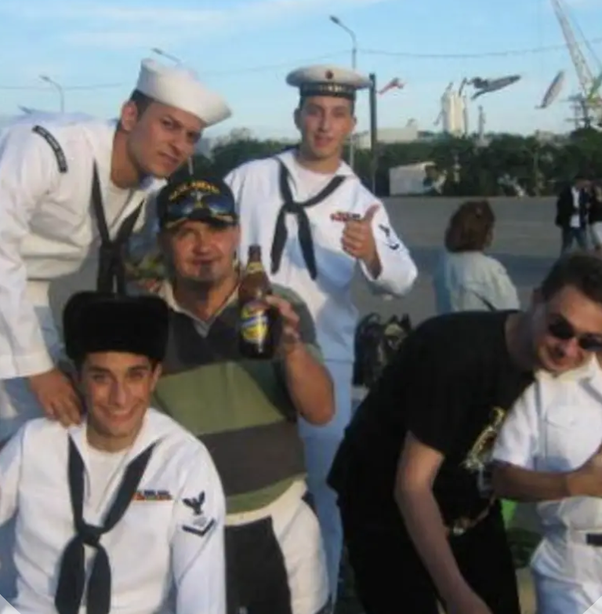
Attached is a little bonus Image. Myself and a few of my fellow sailors from the “Unstable Cable” as we liked to call it. In Vladivostok with some random drunk locals. I’m the tall, lanky dork giving a thumbs up. You’ll see me wearing a Russian Navy hat (whatever, yes I know I’m out of uniform) that I had traded with for a sailor on the Varyag out drinking earlier in the day.
So no, the US Navy has nothing meaningful to fear from anything in the Russian Navy. While on paper it may look like the Russian Navy has some impressive capabilities- it does not have the ability to reliably leverage those capabilities. Russian sailors are unskilled, untrained, and unprepared for war.
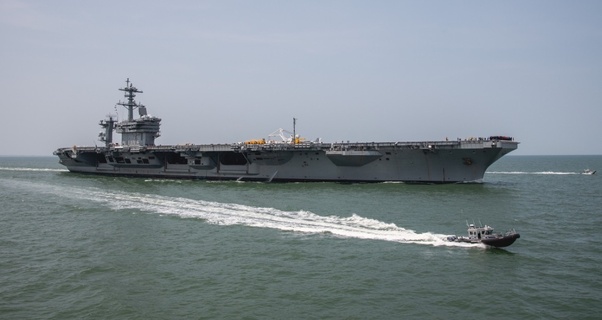
USS GEORGE WASHINGTON (CVN-73) currently holds the American record for time in overhaul, out of action for about seven years, counting sea trials, for her last Refueling Complex Overhaul (RCOH). She entered the shipyard in 2017 and rejoined the fleet in 2024.
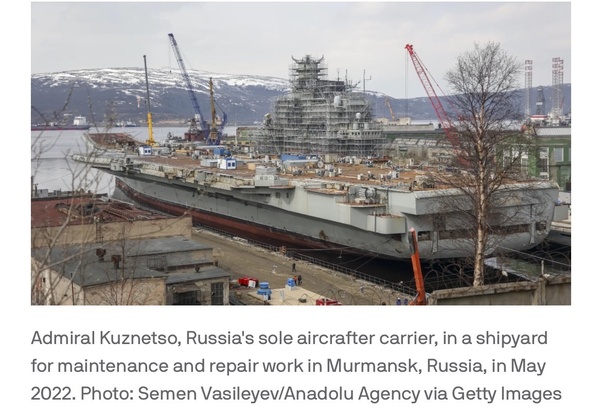
ADMIRAL KUZNETSOV aims to beat that record. She has been in shipyard for six years already and that period keeps being extended. In fact, some speculate that the AK will never go to sea again.
In any event, the Russian navy has already beaten the Americans in the shipyard category by having 100 percent of its aircraft carrier fleet out of action at the same time, since the AK is the only carrier it has.
In contrast, USN are mere pikers in the overhaul game, with only about a third of its flattops being refurbished at a time.
Russian refueling is also much cheaper. USN spent something like $3 billion to tune up the GW’s nuclear power plant so it’s good for another 25 years. The AK’s overhaul budget is secret, but it can’t cost much to acquire some more of the low-grade, bottom-of-the-barrel gunk that Russian ships (like this destroyer) burn to create their signature plume of smoke.
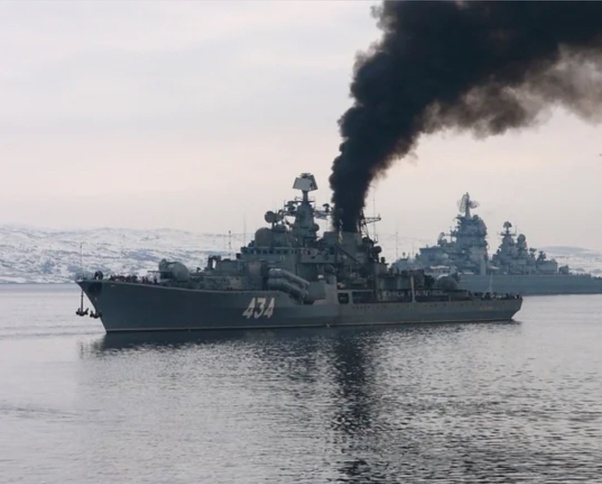
The USN sure can’t match that.