Great question.
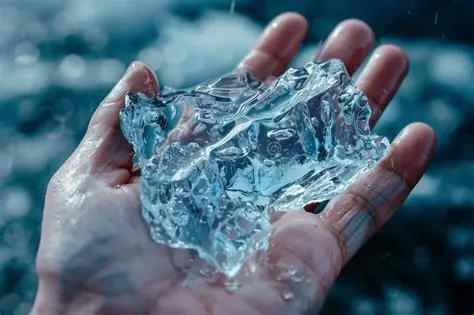
Let us assume that the system is closed, and that no heat comes in the system or leaves the system.
Your question clearly displays that you understand that water freezes at 0 and ice also melts at 0. The difference between these two is the latent heat of fusion. Water at 0 has more energy than ice at 0.
What would happen is the second law of thermodynamics (entropy) would take over. Some of the ice would melt, and some of the water would freeze. But the TOTAL MASS of ice would remain constant and the TOTAL MASS of water would remain constant. They would continue to change shape and tend toward disorder.
Actually a surprisingly difficult question, and there are some interesting answers here already.
I’ll try initially to answer the question as asked, but with the added constraint that the system is closed and the pressure corresponds to the zero-degree melting point; also that both ice and water are pure,
First off I will work with a fully-closed system, which in this case means no gravity (the reason will become apparent when I add gravity back in). The ice will more-or-less settle in a random position under the water (surface tension will pull the ice under if there is a surface) .
After this, ice will be preferentially melt at less stable locations and be replaced at stable ones. The shape will gradually change to that of an “ideal” ice crystal, which is a hexagonal pillar with basal faces.
The new shape is more stable, so the equilibrium temperature is slightly raised. So the ice will grow (releasing heat) until a new equilibrium between ice and water is reached at a very slightly higher temperature. This will of course only happen very slowly…
Now lets add gravity, but leave the system closed in all other respects. The ice will of course float. The pressure on the bottom of the ice block will be greater than on the top, so the bottom will melt and ice will be redeposited on the edges of the block that are near the surface.
As the base of the ice is under pressure its melt temperature will be lower than 0degC. So the surface of the ice will be colder than the surface of the body of the water; if there is a surface open to atmosphere surface water will evaporate and condense on top of the exposed ice, which will push some of the ice down under the water.
This will continue until the ice becomes so thin that the effect of the water pressure differential is about to become smaller than the effect of ice thinness (or the ice covers the available surface, of course – whichever happens first).
Once both pressure-depth and thickness have equal and opposite effects on the rate of change of melting point we will have a near-equilibrium condition, and the remaning process will be a move towards a crystalline shape near the edges.
The reduced melting temperature means that there is a net effect: some of the ice will indeed melt, and the temperature will reduce slightly as a result.
All this too will ony happen very slowly – unless the lump of ice is very small.