No
In Fact, I would postulate that Japan would have had it much worse.
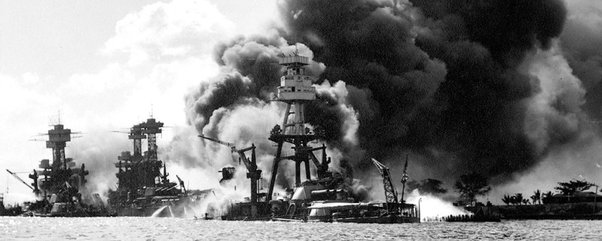
The U.S. Pacific fleet was moved from California to Pearl Harbor by Roosevelt in 1940. This was due to souring relations with Japan, and Roosevelt felt that if war was imminent, the fleet would have to scramble in order to defend the U.S. controlled Philippines.
When the Japanese realized that the U.S. had their carriers out at sea on Dec. 6th, 1941, they almost called off the strike. Many in the Imperial command thought the U.S. knew the strike was coming and ordered to flush the carriers. But in the end, it was decided to continue with the attack. They did cancel a third wave of planes, however, for fear of the Carriers returning for a counter-attack.
With the U.S. carriers based in PH that day, the Japanese would likely have sunk all three. A third attack wave would have been ordered, leading to the destruction of the oil platforms, and the potential sinking of several of the remaining four battleships, including the Nevada, which was quickly repaired after Pearl Harbor.
With this new damage, I imagine casualties could have exceeded 7000+. The U.S. would have lost more battleships, all of its carriers, and made Pearl Harbor unusable for months if not years.
But this is not good for Japan.
Because once the U.S. had originally joined WWII, the U.S. adopted a ‘Germany First’ strategy. U.S. industry was already in partial war production due to Lend-Lease, but it still took time to switch over production fully. As such, for much of the war, the U.S. decided to focus on the European front of the war, with then naval assets doing the minimum in the Pacific to stop the Japanese from attacking the West Coast or invading Hawaii, and the majority helping convoys cross the Atlantic.
With the total destruction of the U.S. Pacific fleet, save for a few damaged cruisers and a couple submarines, the U.S. could not afford to do its Europe first policy. In order to protect the nations mainland, the U.S. needed the 6 Battleships recovered from Pearl Harbor, the Planes on the Carriers, and the 3 ships themselves. Without those ships, the risk was far higher.
I imagine the War Department would have focussed greatly on building ships and planes to fight the Japanese. With this much larger loss of life, the U.S. populous would have a greater blood-lust for the Japanese. Many more resources would be devoted to the Pacific.
I imagine the fighting and island hopping would be bloodier, but quicker. The U.S. (without the Atom Bomb) would likely approach Okinawa by 1943–44. Japan would be bombed and starved for months, resulting in millions of casualties. With a much larger Pacific force, the U.S. would cause far greater damage to Japan.
Now, this could have some potential implications for Europe. Assuming Germany still declare war, Russia still would have seen a cut in Lend-Lease. In addition to slightly more troops in the East, I think Moscow may have fallen. This wouldn’t stop the USSR, and I still think the Russians would beat them back, but it would have drained them more. Perhaps there would be more of an investment in seizing the Egyptian oil fields, or maybe the Germans would reach the Caucasus. Either way, with the fascists reaching the oil, it would allow the Germans to stay warm in the cold Russian winter, making it easier for them to hold out against the inevitable attacks.
Now, in the Pacific, the U.S. would have 3 options:
- Bomb and starve Japan. Hirohito likely wouldn’t care about his people’s suffering, and the people probably would still be loyal.
- Wait for the atom bomb. Waiting a year, however, would likely upset the U.S. population.
- Invade. I think this is is the most likely, with a D-Day style invasion from Okinawa happening. This would lead to as many as half a million U.S. deaths and millions of Japanese, and at least a year of fighting.
With this in mind, by 1945’s end, I imagine a Germany starting to fall back against the far more drained Soviets and the Americans/Brits beginning to invade Italy. Japan probably would surrender by then. WWII ends in 1946, with the U.S. using the atomic bomb, perhaps on Hamburg and Frankfurt, and if no surrender comes, Berlin.
The Holocaust was far more thorough, and millions more of Slavs in the East and Chinese in the Far East were slaughtered, as the Japanese and Germans didn’t stop until far later.
End of the war casualties: 115 million, mostly Soviet and Chinese. 900,000 Americans dead.
So no, in fact this small detail in Pearl Harbor caused far more deaths.
To put it succinctly-
The Japanese attack at Pearl was a colossal mistake.
Japan lost he war on December 2, 1941.
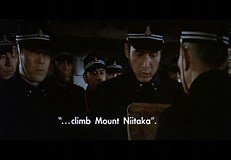
This argument was pushed by Minoru Genda and other Yamamoto supporters. They insisted that Pearl Harbor WAS the right thing to do. In fact it was a military operation that would go down in history as one of the greatest tactical victories and strategic defeats of all time.
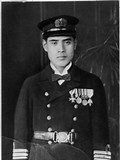
The plan was founded on a profound misreading of American morale by this person-
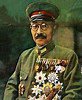
Hideki Tojo.
In the 1920’s he took a one week train ride across the United States. In that time he concluded that the United States, was morally weak and only interested in a life of leisure. This perception stayed with Tojo until 1943 when his government fell.
That was his mistake. It crept into Japans war plans.
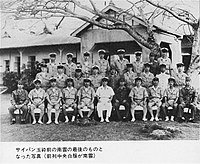
Chuichi Nagumo center. The last known picture of him taken on Saipan in 1943.
Lets just say for the discussion that Nagumo, commander of the Pearl Harbor Strike Force ,got very lucky. Halsey is back in port.
The first two waves take out the majority of the US Pacific fleet, including the Enterprise and Lexington.
Nagumo listens and decides to follow Genda’s recommendation. A third wave is dispatched. It hits and destroys the fuel tanks. It also does damage to the dry docks.
100% success tactically-
Japan still loses the war, later, but she still loses.
The two Navy Ocean act was already becoming fact. On December 7, 1941 5 Essex Class fleet carriers were under construction. Two Independence class light Carriers were also under construction. PLUS the first CVE the Long Island was assigned to the Atlantic fleet.
But there is more-
The Saratoga was just completing an overhaul. The Yorktown, Ranger and Wasp were in the Atlantic fleet at the time. The Hornet has just been commissioned and was preparing to enter service.
That means the US still had the Saratoga, Hornet, Yorktown, and Wasp, available-
I am leaving out the Ranger because she was too slow to keep up with other carriers and cruisers.
By wars end the US built 145 or so aircraft carriers of all types. On the other hand a single fleet carrier (Taiho) entered service for Japan.
There is more. The entire Atlantic fleet battle Line, Texas, Arkansas, New York, New Mexico, Mississippi, and Idaho are intact, The Colorado was being overhauled in Washington State.
The two newest battleships, the North Carolina and Washington were just finishing their shake down cruises.
During the war Japan put two battleships into service. The Yamato and Mushashi.
Starting to see Japans problem?
They should have let the US strike the first blow.