With today’s technology, some good funding, and about three years to plan and build a spaceship, NASA could send humans to Titan, Saturn’s planetary moon.
It would likely take them seven years to get there, five years to come back, so they’d need Food and Fuel for twelve years. A rotating pod could be created for centrifugal artificial gravity so that the astronauts, perhaps twenty of them, wouldn’t suffer from bone density loss. The pod could be made to rotate so that the main cabins would be at 1 G, Earth’s Standard.
The main structure would be static though, weightless.
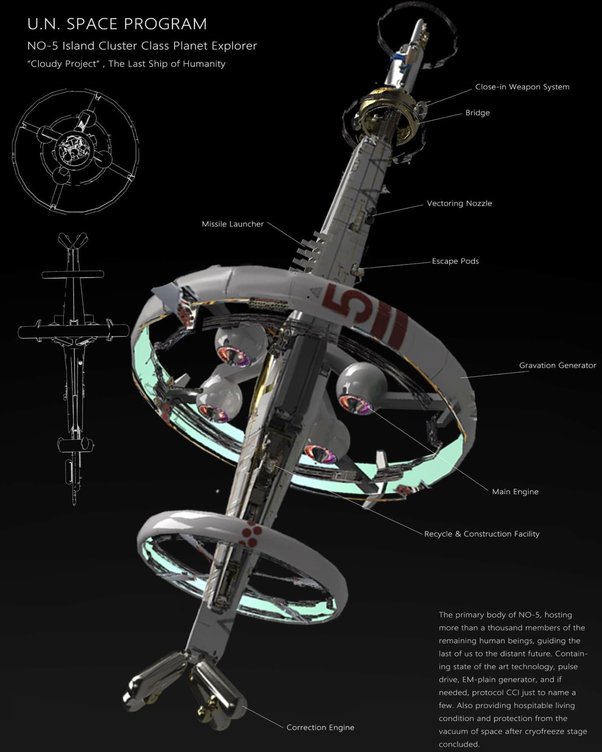
This is an overblown example of what humanity might build in the future.
For now it would need only to be a frame with engines, a life ring, and a control pod in the front, as well as food, water and fuel tanks, as well as a waste processing center.
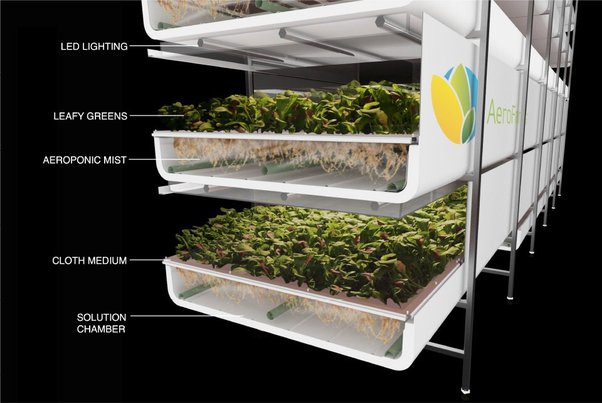
Food could also be produced Aeroponically in part of the life ring.
The current realistic answer – essentially zero. Nasa has no man-rated spacecraft and hasn’t since the shuttle stopped flying eight years ago. Even then the shuttle was not for deep space flight, for that we need to go back to the Apollo.
So let’s recreate the Saturn V and a stripped-down crew capsule, no lunar lander.
The crew capsule will have one seat, with the remainder of the capsule filled with life’s necessities. In place of the lunar lander, a simple storage container, also filled with everything needed to keep a man alive. What we have is essentially a lifeboat.
The highest speed attained by any manned spacecraft was Apollo 10 at 24,791mph. The longest mission without resupply was Apollo 17 at 12.5 days. That was three men, not one and no massive amount of food, water, and air. The longest time a human has been in isolation was a NASA experiment in 1993, Maurizio Montalbini spent 366 days in an underground cavern near Pesaro in Italy that had been designed with Nasa to simulate space missions.
Air can be scrubbed, and water recycled – both are standard NASA practices. Fuel is not an issue because once it burns through, the capsule will continue on a free trajectory indefinitely without slowing. The true limiting factor will be batteries to power everything. Solar will work for a while, but not long given the amount needed. Nuclear would run indefinitely but it has never been used on a manned flight, so I don’t know if it can be adapted.
But just for the sake of argument, let’s say that issue is overcome.
The weakest link is the human – how long before the astronaut goes crazy and opens a hatch. We know that 366 days is possible, so let’s call that the limit.
366 days x 24 hours = 8784 hours x 24,791mph = 217,764,144 miles
Jupiter is 365 million miles from Earth. So our sacrificial astronaut will be somewhere in the asteroid belt. Put another way, that is going from the Earth to the Sun and back
Space is vast and we are only sailing the Mediterranean in a Greek trireme.