January the 4th, 2023, various telescopes on Earth identified an abnormal pattern in our galaxy. It seems like G-type stars, like our Sun, suddenly stop shining for, as of yet, unknown reasons. We have 100 years to prepare. Will we make it?
There will be 10 billion of us about 100 years from now. The task of saving everybody would be enormous. Unless some groundbreaking technologies become available by then, like robotic systems doing all the required work, we might not make it to save all.
Even the people who might survive for some years after the Sun stops shining might eventually die decades after. This is because the challenges would be enormous. We need to provide everybody with heated, sealed shelters, oxygen to breathe, and food.
What we know at this stage is not encouraging. We tried to house eight people at the cost of 200 million dollars in a sealed environment between 1987 and 1991. It was a 1.27-hectare structure called Biosphere 2, an autonomous ecological system that was supposed to provide the inhabitants with all the oxygen and food needs. This experiment was intended to demonstrate the feasibility of living in space or on other planets. It failed miserably to provide people with enough oxygen and food.
We know more in 2022 than in 1987, and we could supply such structures with artificially extracted oxygen and the like this time. Still, if the Sun were gone, we would need to house all these billions of people and generate enormous amounts of energy to supply them with basic needs.
Massive, sealed-from-the-air structures for housing, many nuclear power plants, and hydroponic farms would need to be constructed. Geothermal energy could also be used. We would probably need to switch to vegetarianism or even veganism to survive this. Animal proteins or all food would probably need to be supplied from simple, genetically engineered organisms like yeast. Eating insects or plant foods would become a luxury.
Eight minutes after the Sun stopped shining, the Earth would be covered in darkness. Within hours and days, the temperature would drop to levels similar to the middle of Antarctica and later to levels of Pluto. All plants that produce oxygen would die out.
All oceans would quickly freeze over. Even with all the preparation, many things could still go wrong.
Any damage or replacement to structures would need to be carried out in frigid temperatures. We might not survive for more than a few decades. Some deep ocean organisms would carry on at hydrothermal vents at the bottom of the oceans, and eventually, they might be the only living organisms on our planet.
The question was: Could humans survive without the Sun?
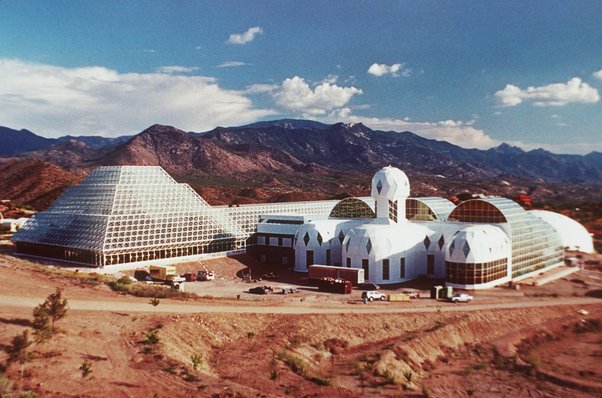
The results of the Biosphere 2 Project for housing eight people in a sealed environment were not encouraging.