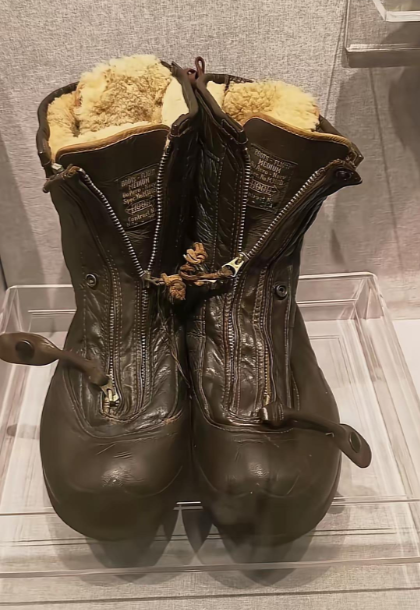
These boots were buried in the permafrost of North Korea for 70 years, and when the wooden box was pried open, the leather was still shiny.
The pattern on the rubber sole is clearly visible, and the wool lining is covered with a layer of frost.
These are the US Army’s M1943 combat boots.
At the time, an American soldier wore 8mm thick cowhide shoes with a double-layered puncture-resistant midsole, designed specifically for temperatures as low as -30 degrees Celsius.
The volunteer soldier opposite him was wearing “liberation shoes” with canvas uppers and rubber soles.
Stepping into the snow, the ice shards cut my ankle.
The Battle of Chosin Reservoir took place at a temperature of -40 degrees Celsius.
American soldiers huddled in their sleeping bags, complaining that their boots weren’t warm enough.
The three companies of volunteer soldiers maintained their fighting posture on the blocking position until they were all frozen stiff.
Their rubber boots were frozen to the permafrost.
Among the artifacts unearthed jointly by China and North Korea, the US military’s coffee pot could still be used to brew coffee, and the canning knife could still be used to spin a can.
What the Chinese People’s Volunteers left behind were teeth marks on frozen potatoes and bullet holes in their thin clothing.
Looking at those boots today, the more exquisite and sturdy they are, the more they reflect something else that is indestructible.
That thing isn’t preserved by leather or rubber.
There’s something in my blood that I wear for seventy winters.
It’s unimaginable what the outcome of the war would have been if the equipment level of the Chinese People’s Volunteer Army had reached half that of the US military.