
A lot of outsiders assume that putting all electrical power lines underground will solve the problem of poles being knocked over by high wind or being crashed into by cars. Here are some things the average person is not aware of that make it impractical to install underground power lines except in urban areas and underneath certain dangerous obstacles like rivers.
- While it is true that overhead lines are vulnerable to wind and other above-ground dangers, underground lines are vulnerable to snow and floodwater. When snow accumulates on roads and sidewalks, salt and saline solution is poured on those surfaces to catalyze melting the snow. That salt will eventually drip underground and will come in contact with underground electrical cables and transformers. The salt will eventually damage these underground electrical facilities. Remember those waterfront apartments in Florida that came crashing down a few years ago? One of the root causes of that fiasco was that the nearby salt water from the Atlantic Ocean was eating away at the building foundations.
- Underground lines are much more expensive to install. At the utility where I work, it can cost over 24 million USD to connect a new urban residential high rise apartment to a distribution voltage service. With an overhead line, all you have to do is to stick the pole on the ground and lay the cables on top of the cross arm. With an underground cable, you have to drill and dig a conduit under the ground, properly insulate it, and then snake the cable through the conduit. That may especially be difficult in certain terrain.
- Besides costing more money, certain workmanship issues have to be addressed when installing an underground transmission line. When you splice high voltage cables (that is, connect the endpoints of two cable segments together), you have to make sure that the connection is perfectly clean and snug. If it isn’t, electricity will not properly flow through and a hot spot will be generated, which will cause the cable to “bird-cage”, overheat, and fail. While this can happen with an overhead cable, underground cables are more vulnerable because an underground environment underneath a street or sidewalk will be much dirtier than a bucket 30 feet in the air. There is a much greater chance for a spec of dirt to fall on your cable splice. A higher voltage cable is more sensitive to splicing issues than lower voltages.
- Did you know that underground cables cannot transport as much electrical power as their overhead counterparts? A cable buried in dirt and sand cannot dissipate as much heat as one that is 30 feet in the air. Remember, after carrying a kilo ampere of current for a few hours, these cables will heat up a lot. Overheated cables have been known to anneal and even set their surroundings on fire.
- And once your underground cable or transformer incurs some sort of damage, it might take days on end for your utility crew to locate the damaged equipment. This is because the equipment is buried out of sight. It usually only takes a few hours to locate an overhead cable that has been knocked over by a hurricane . Even in this day and age, modern equipment cannot easily sense where an underground cable may be ruptured. You could be searching for miles on the higher voltage underground lines.
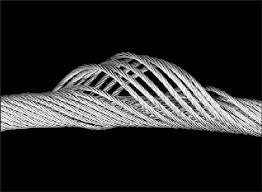
What happens when you overheat electrical cables…
I wish to address some of the counterarguments that some of the commenters have pointed out.
- In this day and age, it is nowhere near as difficult to pinpoint where an underground cable may be ruptured. It is nowhere near as difficult or time-consuming to repair it.
In point 5, I was referring more to transmission cables which operate above 100kV. Underground distribution cables are much shorter (usually less than a mile) and are much easier to manage. High-voltage cables can run for more than 20 miles. You will be inspecting a very long length if something happened to it.
Moreover, repairing an underground cable is very time-consuming. I was in an utility education program last year. On day one, I was a spectator to a crew replacing a distribution pole that was knocked down by a drunk driver. It took only 2 hours with very little fuss.
The next day, I was given the privilege of viewing an underground crew replacing a damaged service transformer underneath the business district of a small town. This time, they needed 3 times as much manpower and vehicles for the job. After cordoning off traffic, the linemen started at 10am to pump water out of the manhole.
At noontime, they were able to crawl into the sewer to begin deciding what had to be done. They spent the next 2 hours moving various equipment underneath and disconnecting the old transformer. At 2 PM, they finally decided to break for lunch. I left soon afterward but they still had to lift the old transformer out of the sewer. lower the new one into the sewer, and connect it. I wouldn’t be surprised if it took them until midnight to finish this job.
The point is that it takes 4 to 5 times as much time to fix underground electrical networks. You cannot even start an underground project if there is snow or floodwater on the ground. If you go to Manhattan, you will see always asphalt on the sidewalks and Con Edison trucks on the road.
That is because they constantly have to dig up the streets to repair their electrical equipment. You will see subway station areas that are closed for months, maybe even years. Fixing underground infrastructure takes far more logistics.
2. There are conduit materials that allow a cable to be installed underwater.
And they have existed for sometime. You cannot install a live overhead transmission conductor above a body of water. If the tower and cables fall into the river, the electrical damage will be horrendous. All of our river crossings have underground cables installed.
If memory serves me right, there are 9 transmission lines under the Hudson River that carry electrical power from northern New Jersey to Manhattan, New York. 7 are in service. I will touch on the two that are out of service later. The Hudson River contains, of course, salt water (and polluted salt water at that).
The problem is that underwater cables are mad expensive. The materials and construction can run up to hundreds of millions of dollars. Then you have to dig into the dock area for a place to put the cable. In a crowded city like New York, that is far trickier than it seems.
3. Underground cables are less vulnerable to falling trees and drunk drivers crashing into them.
True but they are also vulnerable to digging excavators plowing into them. Remember, more than electrical networks are stored in our sewers. There are also gas pipes and water pipes. I can think of at least 3 incidents where contractors broke our underground cables because they didn’t know where to properly dig. Many underground cables were installed decades ago and blueprints might not always be the most accurate.
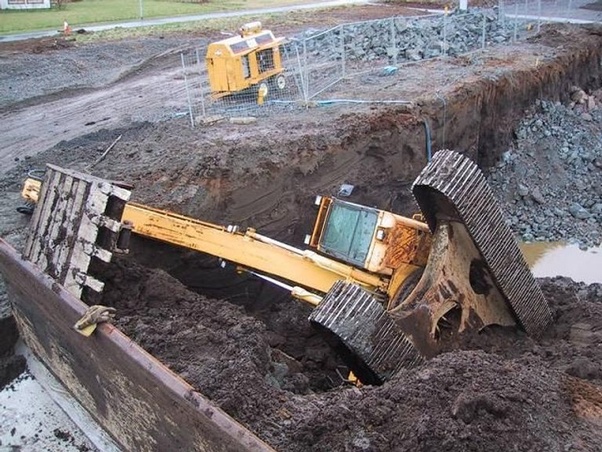
A Digger is not a toy…
I said before that there are 2 transmission lines underneath the Hudson River that are in-operational. That’s because in 2017, a crane in Jersey City collapsed onto the cables. These cables were installed in the 1970’s so they had about 4 decades of use before retirement. So why does that mean we can’t repair and use them again?
4. In this day and age, there must be modern materials or engineering techniques that allow underground cables to conduct as much power as an overhead cable without overheating.
Actually, we have had retrogression in that respect. It used to be that we would oscillate oil around our underground cables. The moving oil would dissipate heat, allowing the cables to carry more electrical power. These are called HPFF (high pressure fluid filled) cables. We got rid of these because they aren’t environmentally friendly.
When the crane in Jersey City fell onto our cables, they ruptured the oil-filled conduits. We realized that the structural integrity of the conduits had been permanently damaged. If we tried to repair the cables and put them back in service, the conduits will leak oil profusely into the Hudson River, causing an incident similar to the Exxon Valdez oil spill. Thus, there are two dead cables under the Hudson awaiting demolishment and replacement.
Not in my backyard…
HPFF is going away and nothing Donald Trump can do will bring them back.
5. Underground cables will help in fire-prone areas like California.
Maybe true but California is also vulnerable to flooding and earthquakes. The erosion and seismic activity might damage underground structures. I acknowledge that earthquakes will also tip over transmission towers. My specialty is electrical engineering, not civil. I know that construction techniques for earthquake prone areas have existed for some time (like in Japan) so maybe moving more electrical networks underground in the drier areas of California might help.
Now, an overhead transmission line is supposed to have a minimum clearance distance from any objects that could catch on fire (like trees). California has a lot of dry timber. The reason why the state always goes up in smoke is because environmental regulations make it very difficult to remove dry foliage.
I heard that there is also a lot of red tape with the different government agencies. None of them want to spend money or accept responsibility for controlled burns or removing foliage. Furthermore, I heard that the utilities there have some pretty non-standard rules regarding tree removal. I live on the East Coast so to my readers from California, please correct me if I am wrong.
I am NOT saying that we should avoid underground electrical infrastructure all together. You really cannot have overhead lines in a place like Manhattan or Jersey City. You also can’t install an overhead line crossing a river. I am just saying that it really doesn’t make sense to build underground electrical networks everywhere. You will quickly run out of money and time to build and maintain the infrastructure.
Thank you for the 1900+ upvotes. I won’t deny that it is quite satisfying to my ego. I modified this answer based on feedback and some more research I did. Please keep sharing this answer if you find it educational.