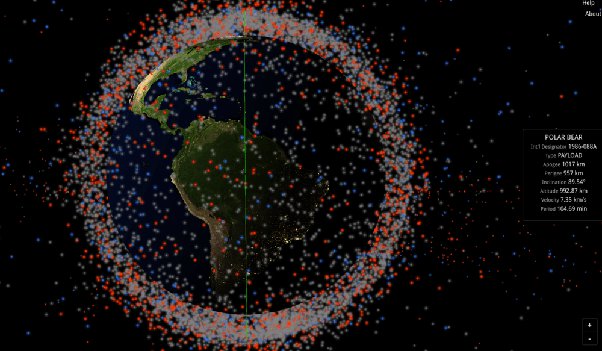
Obvious to casual inspection? A few thousand years for most technological objects, except for space junk in high orbits. Possibly a few hundred thousand years, for engineering works such as quarries and roadcuts, in dry environments.
All evidence? Billions of years.
The longest lasting evidence would be road cuts and other engineering works that cut into hard rock, which subsequently got filled with sediment, buried, lithified, and eventually resurfaced and eroded out. Fossils, in other words. We have found fossilized bones from the Cambrian Explosion, 540,000,000 years ago, and a few fossils from even further back.
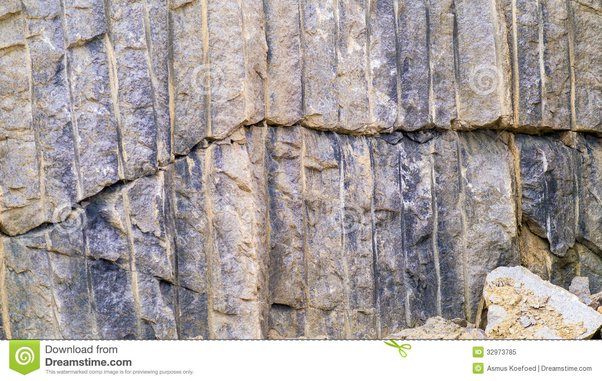
Just from a minute of Googling, I found this image of a granite face that was drilled and then blasted. If you found an old rock, weathering out of younger rock, with this pattern, you could confidently say that someone way back in the past had metal working and chemistry technology on par with what we had in 1900.
Granted, you might have to look quite a while before you found such a well-preserved specimen. But we have done a lot of quarrying, cutting, and blasting over the years. Signs like this would be preserved a lot more easily than animal bones.
BTW, technological objects like tools, or even manufactured items, would also fossilize. Not as well as worked granite, but better than biological materials. So you would, very rarely, also find fossilized hammers, wrenches, old TV sets, potentially anything that we make and throw away. (As several comments have pointed out, glass and ceramic objects would fossilize exceptionally well.) Again they would be rare, but not as rare as animal fossils, and we know those last for eons.
I researched the answer to a similar question a while ago. The verdict came down to three things:
Concrete, metal, and plastic.
Plastic will completely degrade within 1,000 years or less.
Metal will completely biodegrade within 500 years or less.
Concrete…is interesting. If built with pure concrete, a building or structure can last virtually forever. Concrete is not really biodegradable. If a structure is built from steel reinforced concrete, then it will crumble rather quickly (500 years or less) due to the way that the rusting steel and concrete interact.
But technically, concrete structures can be broken down and covered over in herbage, so I guess that is a way to erase human presence from, say, an alien spacecraft zipping by on a reconnaissance flight.
Satellites in space are a totally different game. They don’t have the threat of biodegradation because there is nothing growing in the extremely cold (0K; -273.15°C; -459.67°F) space. Materials which would have biodegraded on Earth in a matter of centuries would stick around for many, many millennia, if not billions of years.
The only things which could bring down satellites would be asteroid impacts, solar winds, harsh radiation from the expanding sun in millennia to come, or gravity pulling them down after an extremely long time.
I would say, due to satellites, there will be evidence of the human race forever.
Since a lot of comments have come in arguing some of the numbers, I would like to clarify that this is an approximation. Some metals will certainly stay around for thousands of years, maybe even a million years under perfect conditions before degrading unrecognizably, but who knows?
Same with plastics. Certainly there are many, many instances where these materials would also degrade before their time. On an average, I would still stick to the approximations I originally put down.
Also, thank you to those of you who mentioned glass. That has a very long life, as well. New Hampshire Department of Environmental Services estimates 1 million years for a glass bottle to decompose. But who actually knows?
Although satellites around the Earth may certainly come down within a hundred years or a thousand, or however long it takes for gravity to end their orbit, I do believe that there will always be space junk. We have so much, and much more to go out there in the future.
For example, what will happen to the Voyager 1 and Voyager 2 when they become obsolete? They will become space junk floating far from the orbit of any planet. It will take a very, very, very long time for solar winds, radiation, asteroids, and the unknown to delete those things from existence; possibly they will just float on forever in the abyss?
Also, thank you, Michael the IT Bloke, for pointing out that the Moon is a wonderful satellite that will contain quite a bit of human made relics for quite possibly forever.
Also, thank you, Jonathan George, for pointing out that our extensive asphalt roads and the chemical composition in the atmosphere creating layers in the soil and ice will stay on the Earth’s permanent record forever along with all our billions/trillions of fossilized bones.
Just look at how much junk we have: