
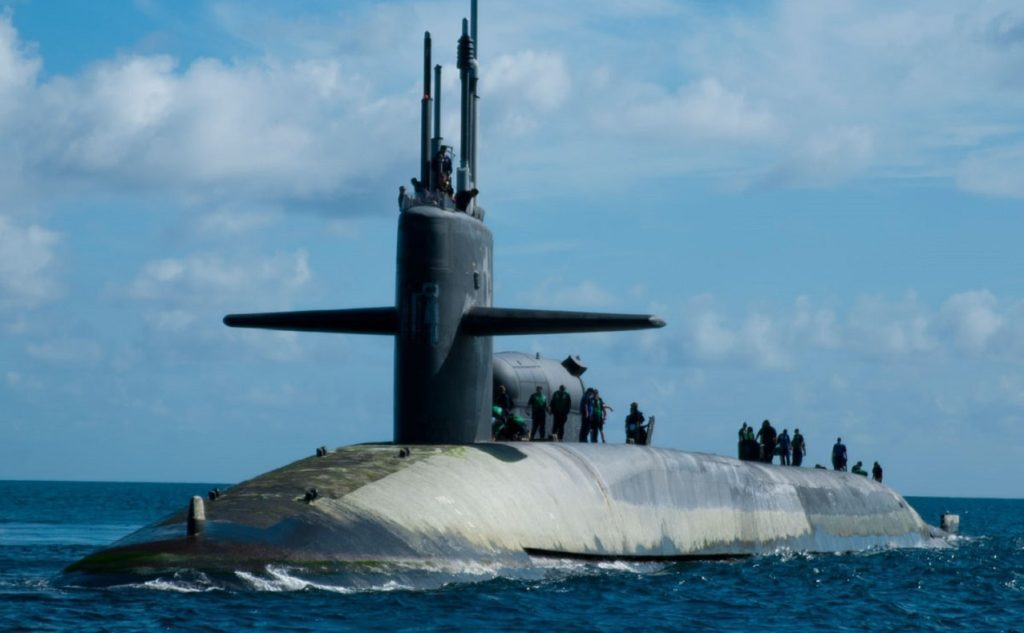
Knowledge

Do modern nuclear submarines creak and strain when going deep like they show old subs do in the movies?

The following is true of every submarine I have served or ridden on:

You can tell who the experienced submariners are on a boat by asking them one of two questions: “how fast are we going?” and “how deep are we?”.

Someone who is new to submarining (NUB) will immediately start looking around for an indicator panel. That’s not a bad habit to be in—in the LA class the depth and speed were available on various displays so you typically wouldn’t have to go far to get an answer. Someone who is a little more experienced would know immediately where to look to get an answer to your question.

Any sailor who had been on the boat for long enough? They already know the answer. Different speeds made a slightly different shimmy in the boat. Different depths might mean that that rivet over there is 1/2 covered by the curtain instead of 3/8. I’m swaying back and forth, but not that much—I’d better finish my coffee before we come all the way to periscope depth, it feels like there’s weather up there.

I’ve never heard anything creak or strain audibly on any of the nuclear or diesel subs I’ve been on. But you can tell nevertheless.

Related Posts

If an astronaut working on the International Space Station were somehow cut loose from his tether, would he fall back to Earth or orbit around it?

If an astronaut outside the ISS has his or her tether broken, they do not fall to the Earth. Before the tether was broken, the astronaut was in orbit at…

Escape velocity is supposed to be 24,000 mph, but our rockets never achieve this speed. How does that work?

Imagine you are sitting on a skateboard at the bottom of your drive and you need to get to the top. You could push off your garage door…

Can humans live on the side of a tidally-locked planet where neither day nor night exist?

Humans with their technology developed on Earth could live on a tidally locked planet where neither day nor night exists. We used to think that such planets become…

How did NASA make the shuttle safer after Columbia?

The problem was not just the piece of foam that struck the wing, it was a failure of imagination — NASA had seen foam fall before and decided…

Why do US Air Force fighters like the F-22 and F-15 place the engines right next to each other while Russian fighters like Su-27 always have a gap between the engines?

The United States has this thing where we learn from our mistakes. One of those mistakes was spacing twin engines as far apart as we did in the…

Is Mars too small to have a permanent atmosphere?

No, it is not. It used to have a thick atmosphere, perhaps thicker than Earth’s. It had that atmosphere for a couple of billion years and had oceans….