
Science

How does a human body decompose in space?

Unlike decomposition on Earth, governed by bacteria, insects, and a host of environmental factors, the process out there unfolds in an entirely alien way.

Forget about putrefaction as we know it. Space is a near-perfect vacuum.

Without oxygen, the legions of aerobic bacteria that feast on our tissues after death can’t operate.

Depending on where you expire in space, your first fate would likely be either mummification or flash-freezing – not exactly what we picture with decomposition.

A body exposed to the naked vacuum, say, ejected from an airlock, would rapidly lose fluids as the lack of pressure forces gasses and moisture to boil away.

If within range of a star, you’d become a desiccated husk, skin leathery and dark from relentless radiation damage.

If far from any heat source, you’d freeze into a macabre popsicle.

Some decomposition might still occur, just far slower.

Your gut bacteria are anaerobic – they don’t need oxygen. For a time, those microbes would keep digesting what was left in your digestive system.

Eventually, the relentless radiation of space breaks down complex molecules.

Over a vast stretch of time (we’re talking centuries or millennia) what’s left would likely degrade further, a slow disintegration driven by cosmic rays rather than hungry critters.
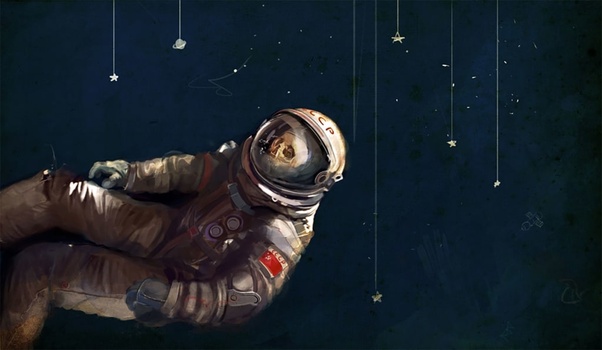
Whether you’d be reduced to scattered atoms or some kind of bizarre space-mummy depends on your trajectory and a staggering amount of luck.
Related Posts

What would happen to Earth if a 5kg metal ball from space is thrown toward it at 99.99% of the speed of light?

The relativistic increase in mass of the metal ball due to velocity (70 times) x 5 kg means the ball will have an effective mass of 350 kilograms , put…

What makes light travel forever?

There is an obvious answer and a super, amazingly cool one. The obvious one is that in the vacuum of space, there is nothing to block the light…

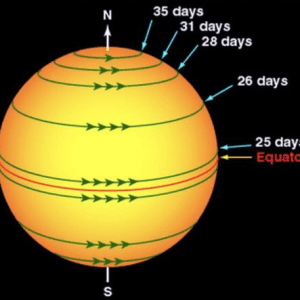
Does the Sun also rotate like Earth?

No it does not. The Sun does rotate, but it does not rotate like the Earth. That’s because, despite its fluid centre and atmosphere, the Earth rotates (more or less) like a rigid…

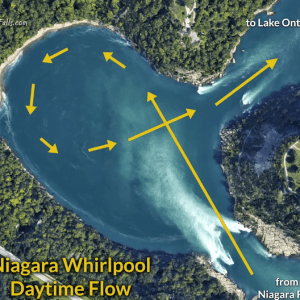
Is it true that Lake Erie might eventually drain due to the movement of Niagara Falls, and how long could that actually take?

Yes. The hard dolomite cap of the Niagara Escarpment pretty much acts as a natural dam to contain Lake Erie. Its surrounded by those rock formations on all…

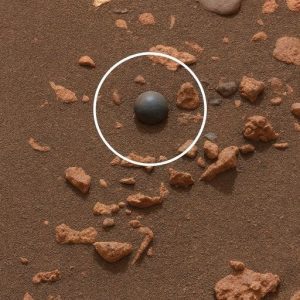
A marble on Mars, really?

This is a real image of a perfectly spherical rock on the martian surface. Back in 2004. The opportunity rover lands on Mars. Soon after, it found something…

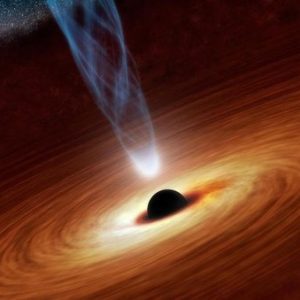
How fast is the Milky Way’s supermassive black hole spinning?

We just discovered that the supermassive black hole in the center of our Milky Way Galaxy spins near the maximum possible spin a supermassive black hole of this…

error: Content is protected !!